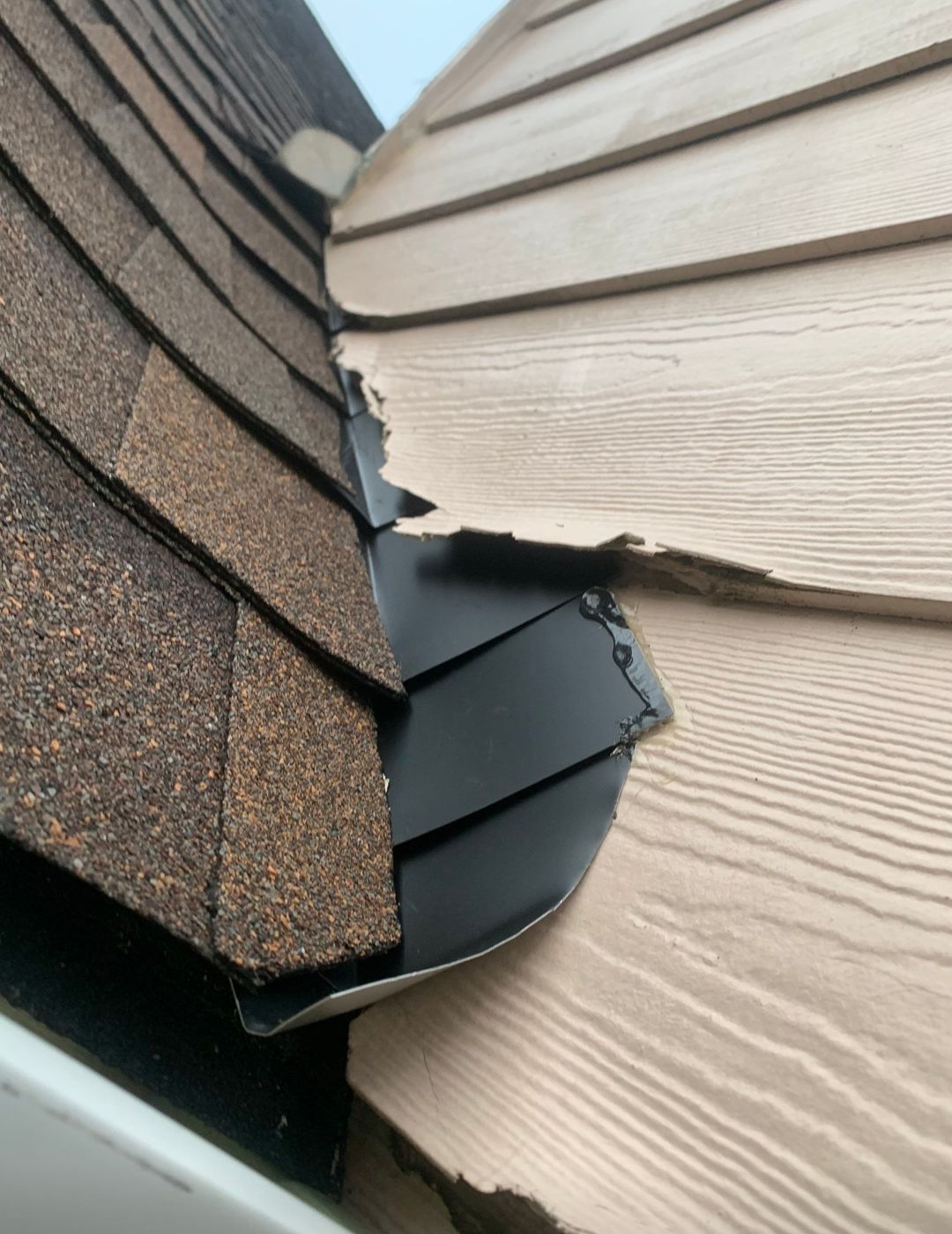
There is a small part on every roof that runs into a wall that a lot of roofing companies simply forget: the kick-out diverter, also called kick-out flashing. It costs a few dollars, takes a few minutes to install, and it can save a wall from thousands of dollars of rot.
Where the problem happens
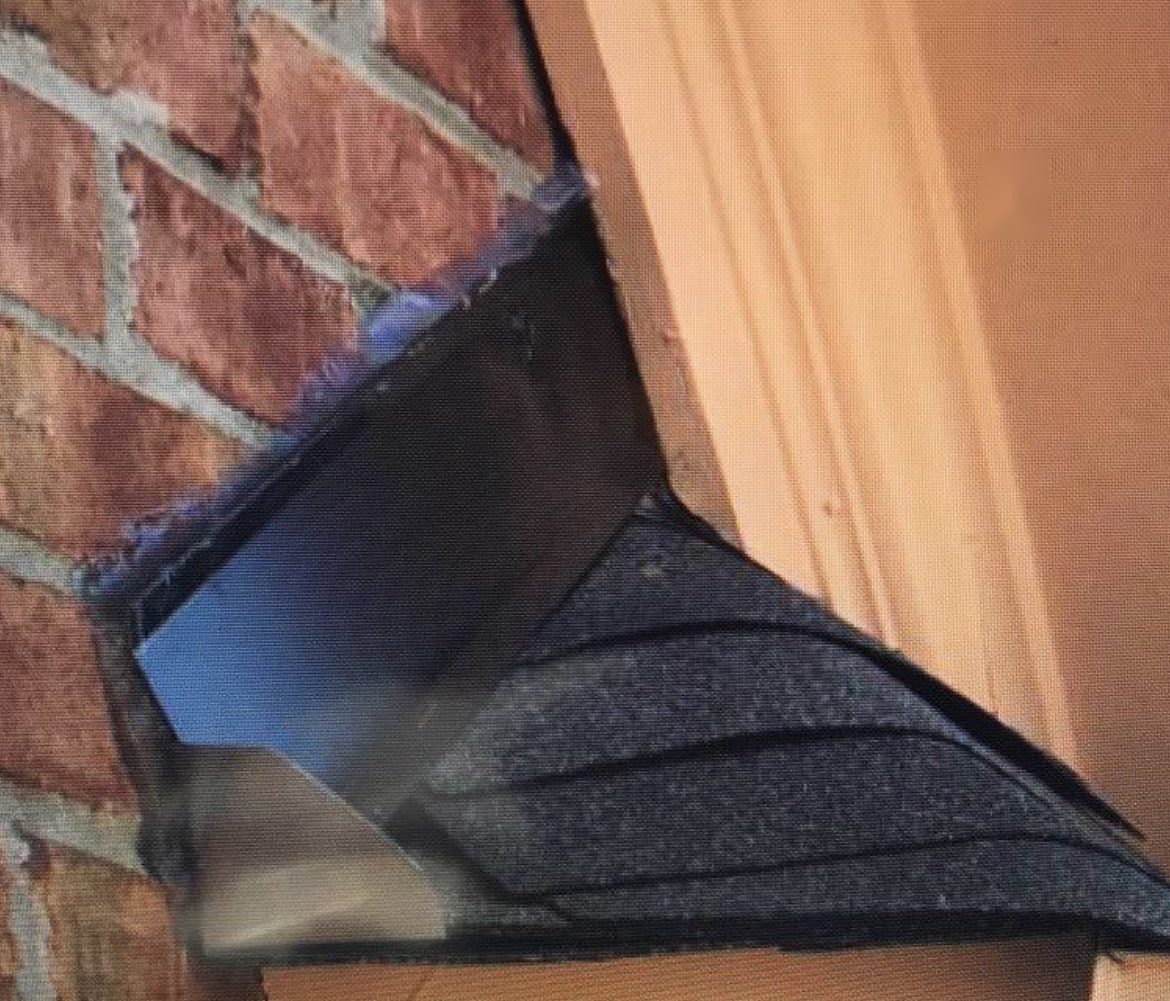
Wherever a lower roof runs along a wall, for example a porch roof, a garage roof or a lower section next to a second story, the joint is sealed with step flashing. Rain runs down the roof, along that step flashing, all the way to the bottom edge of the roof. Without a kick-out, the water reaches the end of the flashing and pours straight down the face of the wall, behind the gutter.
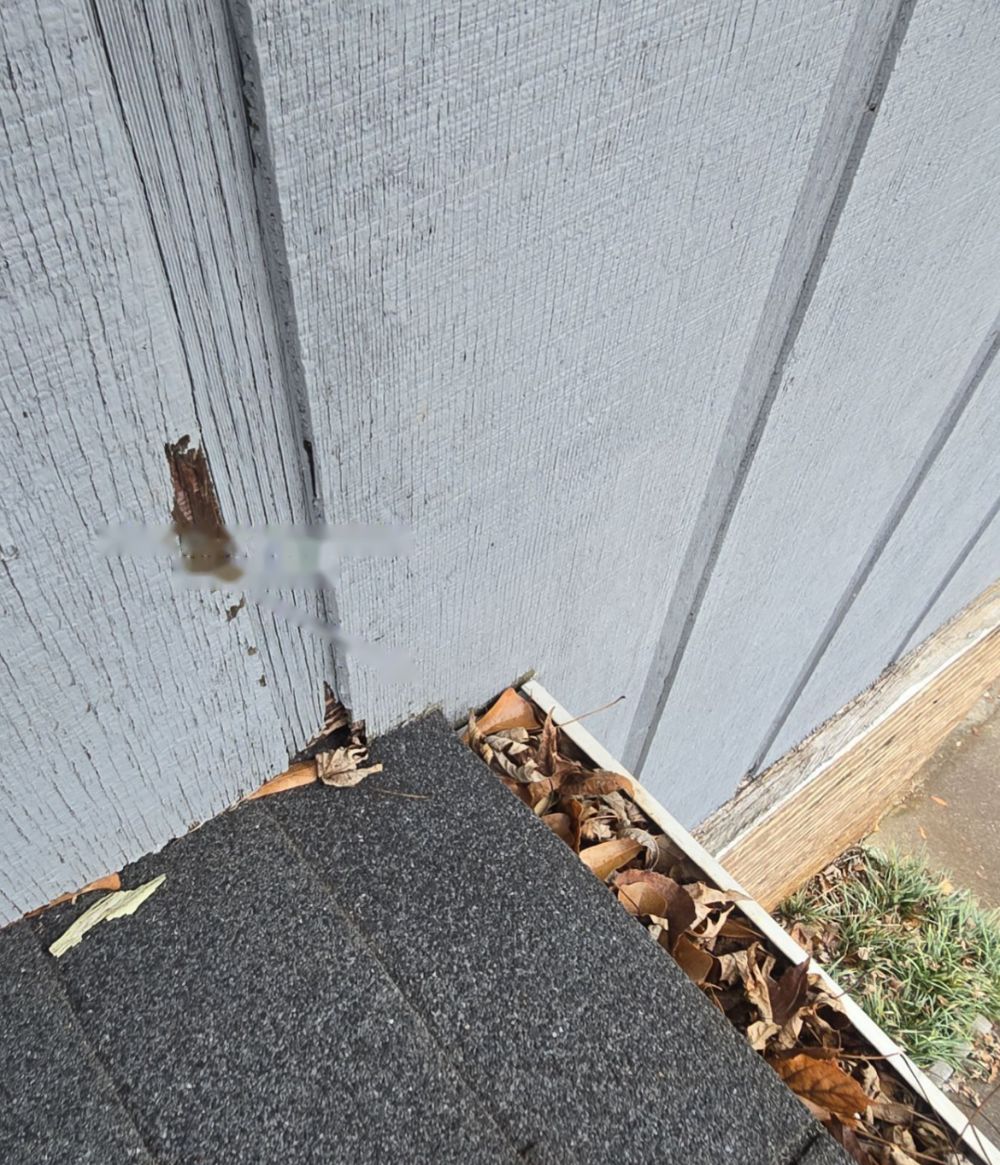
Over time that water soaks into the siding, the sheathing behind it and the framing. On houses with hardboard or fiber cement siding you see swollen, peeling boards right at that corner. On brick you see stains and mortar damage. The damage is often hidden until it is already bad.
What a kick-out does
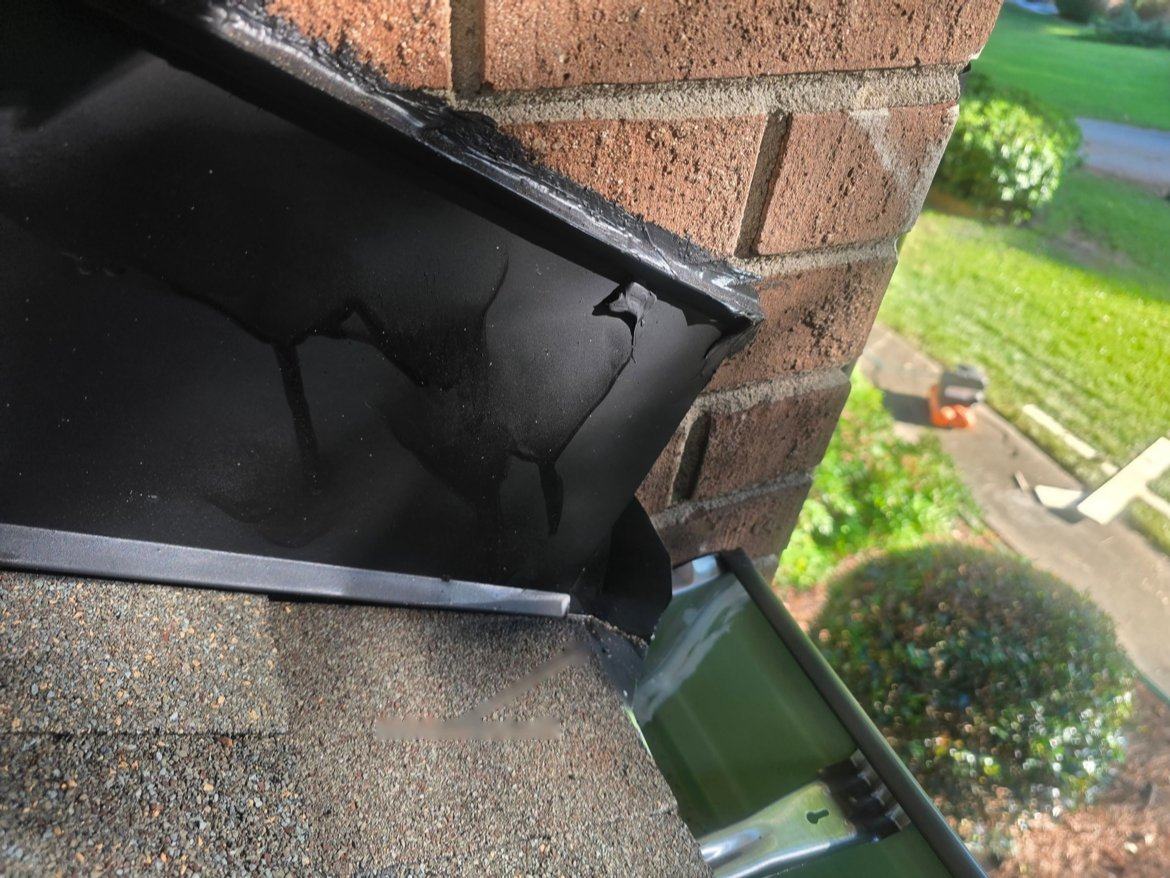
A kick-out diverter is a small bent piece of metal installed at the very bottom of the step flashing. Its angled lip turns the water outward, away from the wall, and sends it straight into the gutter, where it belongs.
Why a kick-out alone is not enough
With a kick-out in place, all the water from that roof edge goes straight into the gutter. That is exactly what you want, but it also means everything the rain washes off the roof, leaves, pine needles and shingle grit, goes into that same corner of the gutter. Without a gutter guard, that gutter will clog, guaranteed, and usually sooner than you think. Then the water spills over the side and you are back where you started.

A clogged gutter is also heavy. Wet leaves and standing water add a lot of weight, and the old-style gutter spikes and nails can not hold it. Little by little they pull out of the fascia, the gutter starts to sag and lean away from the house, and its life gets much shorter.
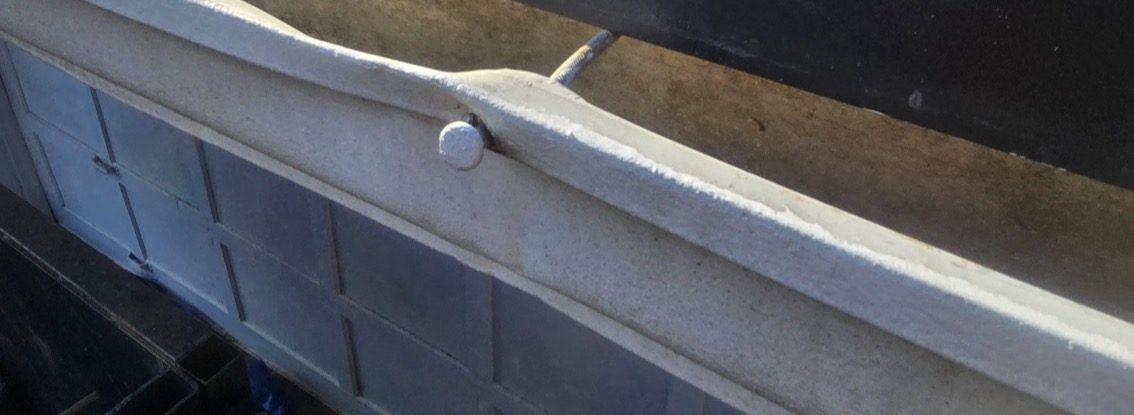
That is why we recommend gutter guards together with kick-outs: the kick-out sends the water into the gutter, and the guard keeps the gutter open so the water can actually drain away.
Gutter guards: the second half of the job
A gutter guard is a perforated metal cover that sits on top of the gutter and slides under the first row of shingles. Rain falls through hundreds of small holes and runs into the gutter, while leaves, pine needles and twigs stay on top, dry out and blow away. The gutter stays open, the downspouts stay clear, and the water from the kick-out actually has somewhere to go.
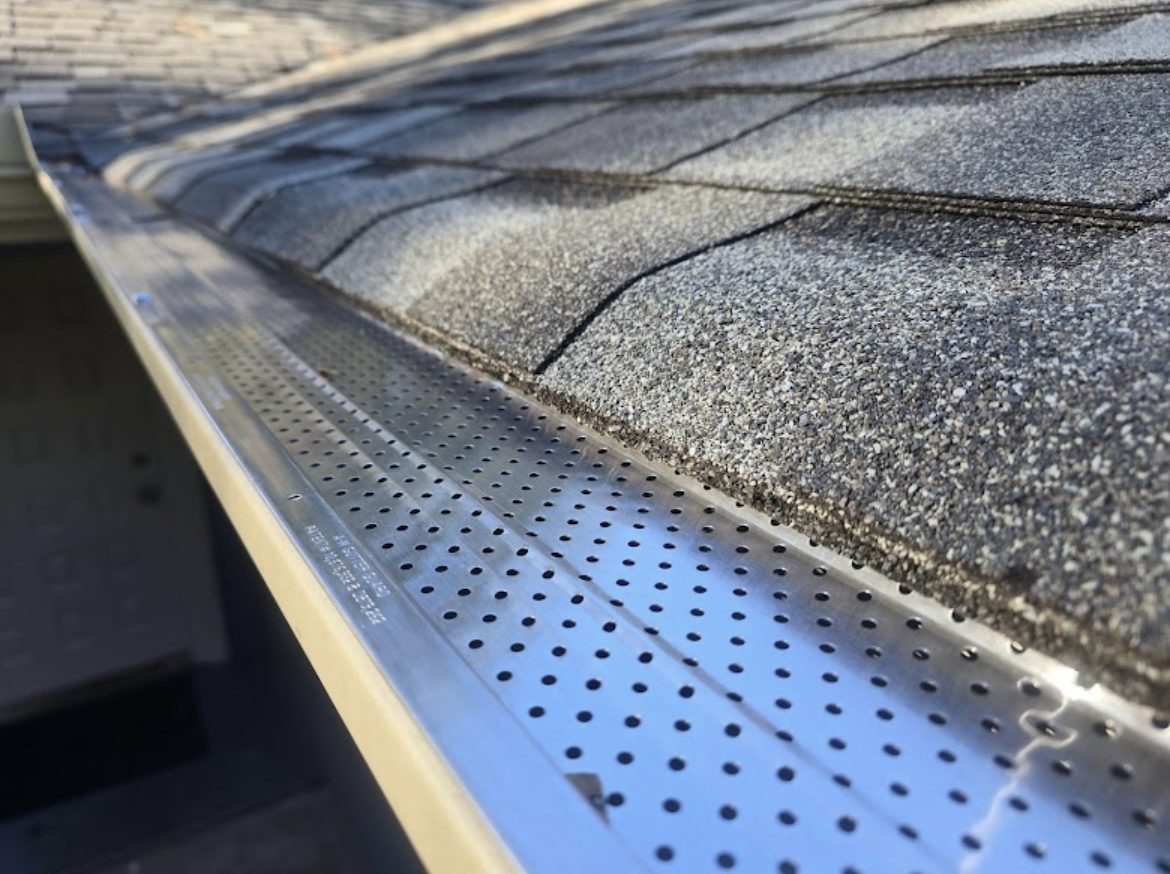
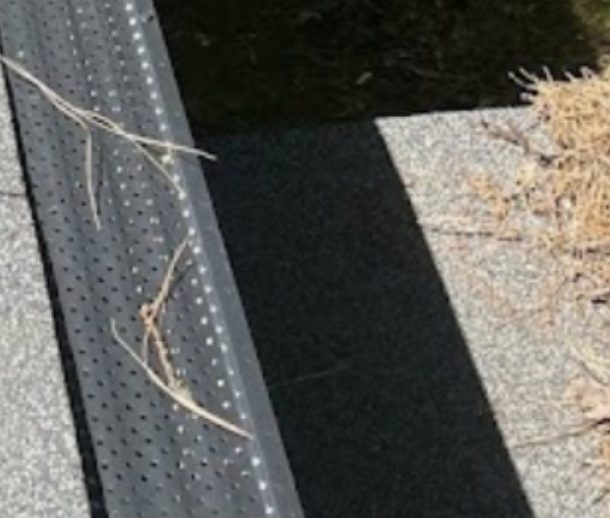
Together, these two small parts protect two of the most expensive things on the outside of your house: the kick-out keeps water off your siding and out of your walls, and the gutter guard keeps your gutters working so that water drains away from the foundation. On most homes we recommend both. See our gutters and gutter guards page.
We install one every time
On every roof replacement and every flashing repair where a roof edge meets a wall, we install a kick-out diverter along with the new step flashing. It is a small detail, but it is the difference between water going into the gutter and water going into your wall.
If you see swollen or stained siding at the bottom corner of a roof line, or water pouring behind your gutter in a storm, a missing kick-out is the first thing to check. Call us for a free inspection.
What happens without a kick-out and gutter guards
Here is a corner with neither. There is no kick-out, so the water off the roof runs straight down the wall, and there is no gutter guard, so the gutter right below is packed with leaves. The water has nowhere to go: it sits in the corner and soaks the siding, and the boards are already starting to rot. This is exactly what a few dollars of metal and a gutter guard would have prevented.