
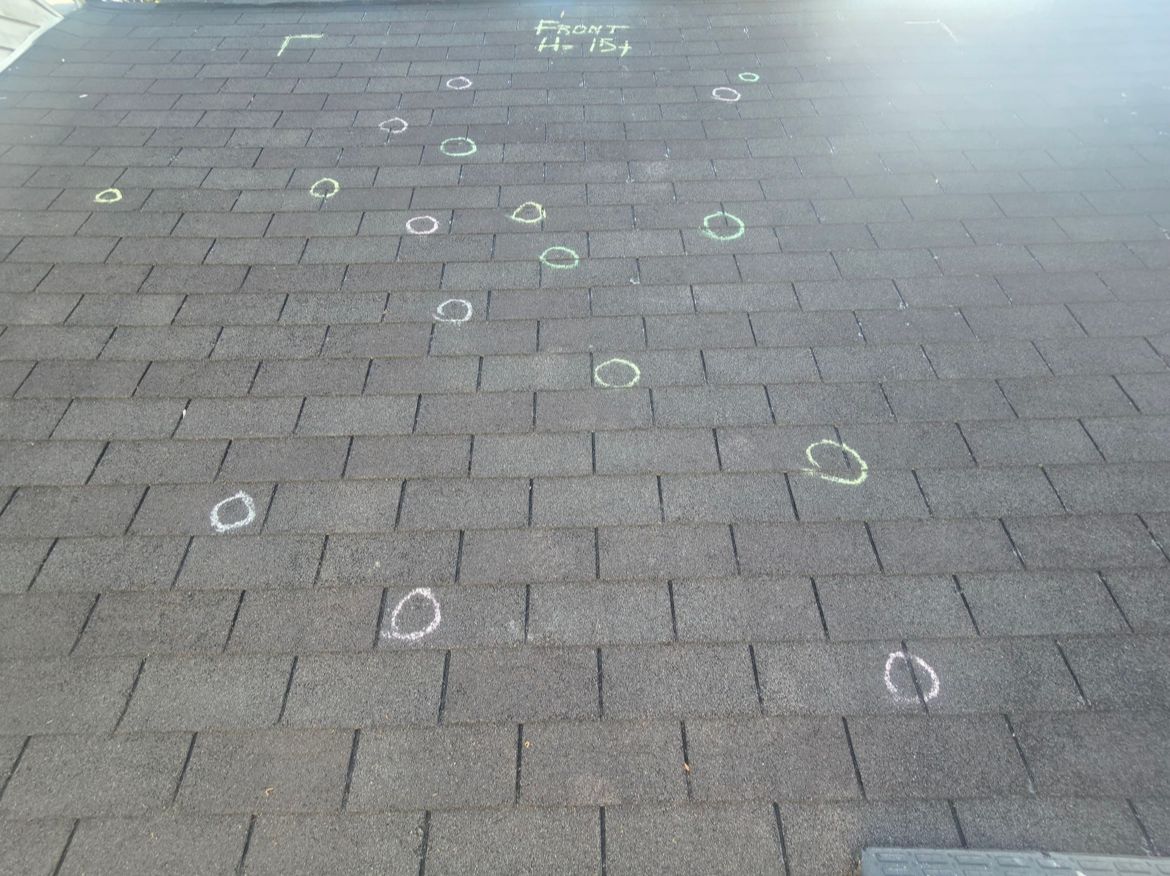
After a hail storm, most homeowners look up from the driveway, see that the shingles are still there and decide the roof is fine. The problem is that hail damage is usually small, and you can't see it from the ground.
What hail damage looks like up close
- Dark spots or bruises where the hail knocked off the granules, the small stones on top of the shingle.
- Soft spots that feel like a bruise on an apple when you press on them.
- Cracks or broken edges on older, brittle shingles.
- Dents in metal vents, gutters and downspouts.
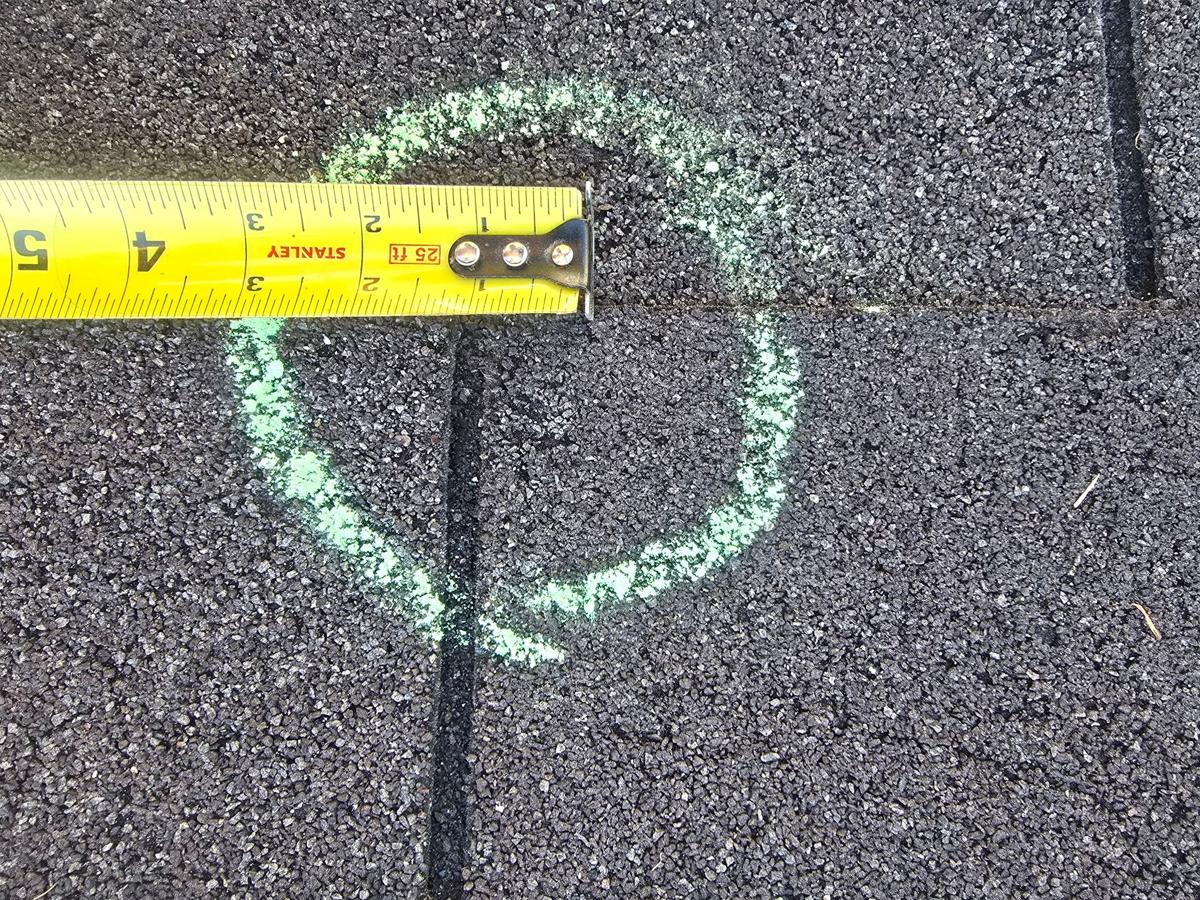
On the roof, we circle each hit in chalk, measure it and photograph it, so you and your insurance adjuster can see exactly what's there.
Hail spares nothing, not even the ridge cap
Hail is serious. A single storm can hit every slope of a roof in a few minutes, and it does not pick and choose. The flat field shingles take the most hits, but hail also cracks pipe boots, dents vents and gutters, chips paint off siding and window frames, and goes after the ridge cap at the very top of the roof.
The ridge cap is the part people forget about. It sits at the peak, it is bent over the ridge, and it takes hail straight on from both sides. When hail knocks the granules off the ridge cap, the asphalt underneath is exposed to the sun and starts to crack. Because the ridge is the highest point of the roof, a cracked ridge cap lets water run down into the attic and along the rafters, often far from where the stain shows up on the ceiling.
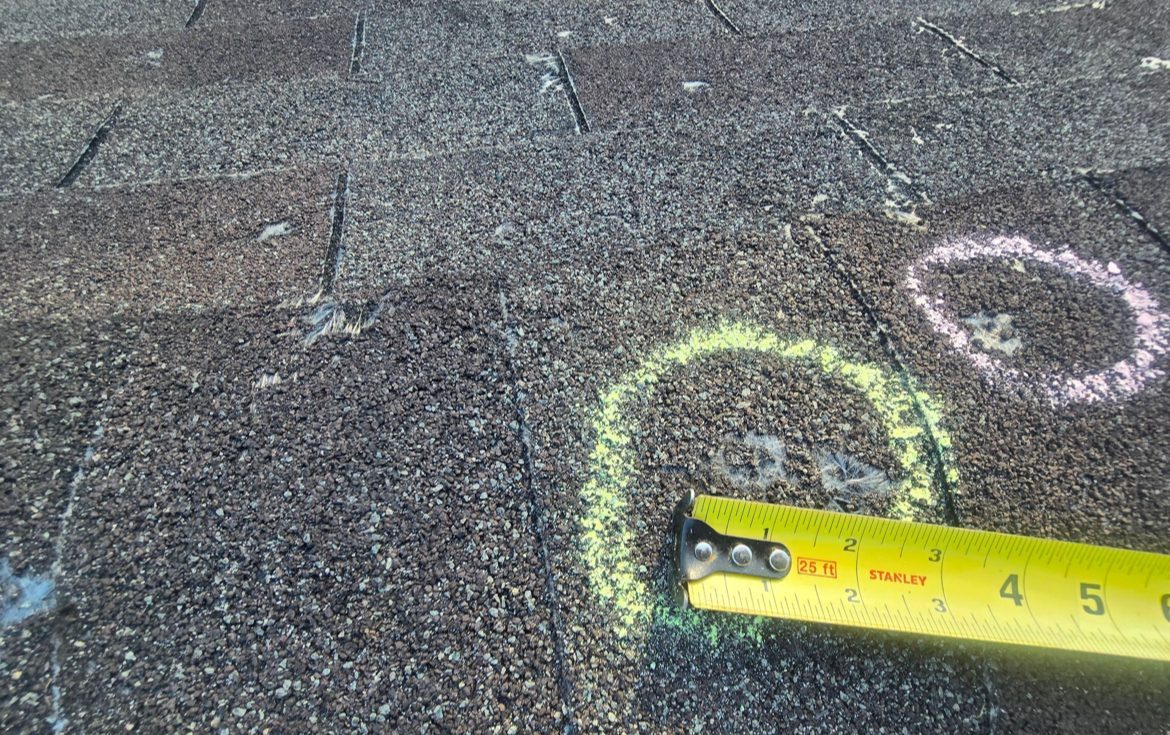
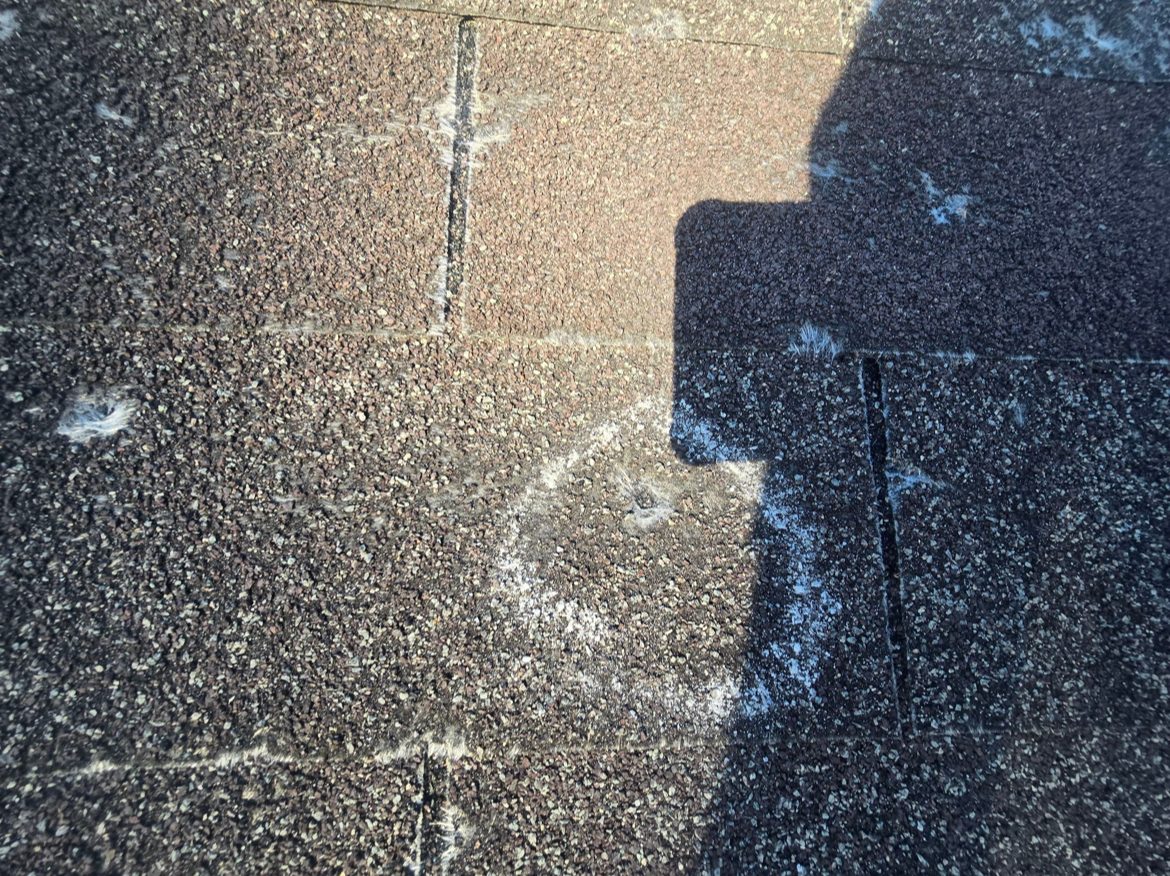
Up close, a fresh hail hit looks like a dark round spot where the granules were knocked away, sometimes with a soft, bruised feel when you press on it. Older hits turn shiny and start to crack. Some hits are so small you only notice them when the light is right.
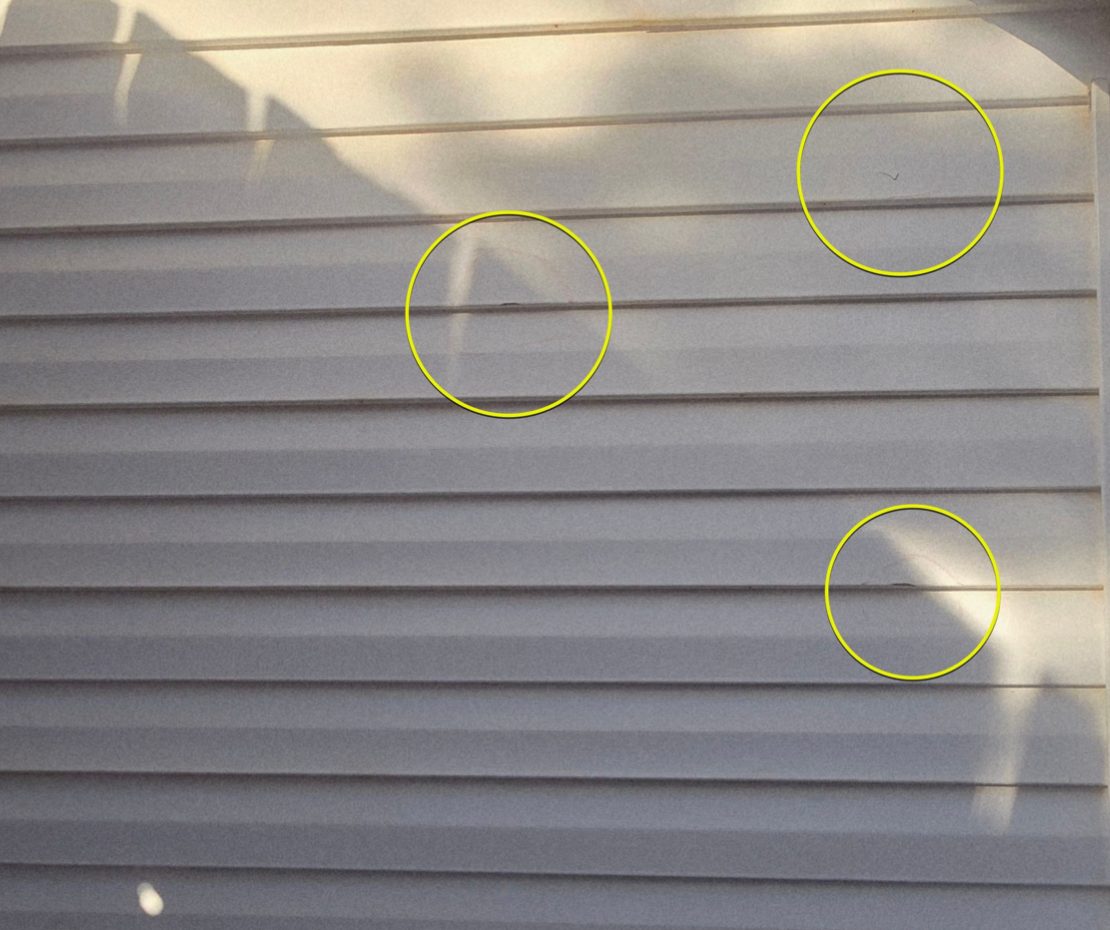
Even vinyl siding is not safe. Hail cracks and punches small holes in it, usually on the side of the house that faced the storm. The damage is easy to miss from the yard, so we walk around the house and mark every hit for the adjuster.
A trick for metal: plain sidewalk chalk
Hail dents on metal, like counter flashing, chimney caps, vents and gutters, can be almost invisible, especially on painted surfaces. A simple trick helps: take ordinary kids’ sidewalk chalk, turn it on its side and rub it lightly over the metal where you suspect hail. The chalk sticks to the flat surface but skips the dents, so every hail hit shows up as a clear dark spot.
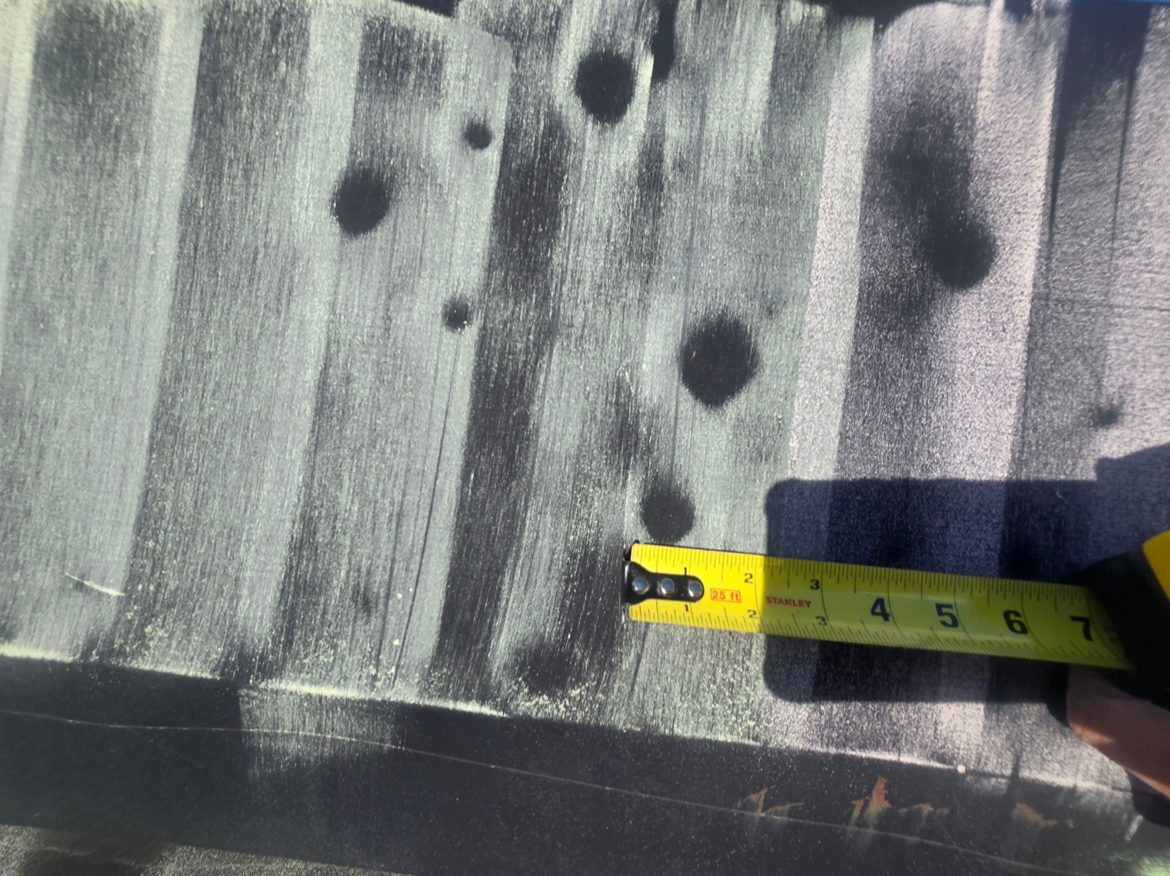
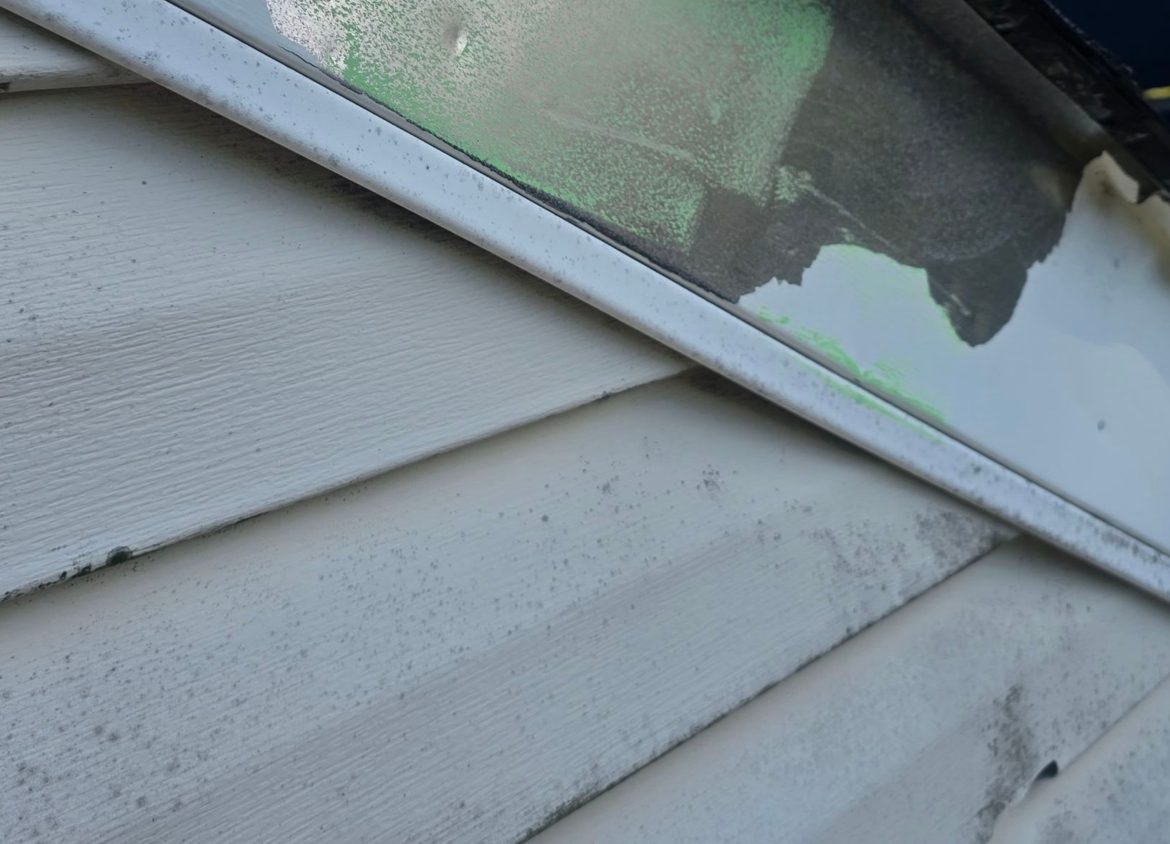
We do this on every inspection, then photograph the results for your insurance company. It is one of the easiest ways to show an adjuster damage that otherwise looks like nothing.
That is why our inspection covers every slope, the ridge cap, the vents, pipe boots, gutters and the siding, not just one corner of the roof. Insurance adjusters look at all of it, and so do we.
What you can check from the ground
- Dents on gutters, downspouts, mailboxes or your car.
- A lot of granules washing out of the downspouts.
- Damaged siding, window screens or patio furniture.
If you see any of these, there is a good chance the roof was hit too.
Why it matters even if nothing leaks
Hail damage often doesn't leak right away. But once granules are gone, the sun breaks down the shingle faster, and leaks show up months or even years later. By then it may be too late to file a claim for that storm, because most insurance policies have a time limit.
Don't climb up yourself
Walking on a roof is dangerous, and stepping on hail-damaged shingles can make the damage worse. Let a roofer do it. Our inspections are free, and we send you the photos either way.